Why People in Germany Get Vaccinated

Our vaccination motivation study is now published in BMJ Open

On January 6th, 2022, I had referred to the preprint of our study “Why do people consent to receiving SARS-CoV2 vaccinations – A representative survey in Germany” and discussed it in detail there [1].

Now it has been published in British Medical Journal Open (BMJ Open) [2]. The content has not changed from the preprint, so I won’t go into detail about the study again now. Only one additional analysis was added at the request of a reviewer.

Read more

Without Vaccination 18 Million More Deaths Worldwide? – Really?

People like me are often accused of not taking note of the high-ranking published data on the danger of SARS-CoV2 and the effectiveness of vaccination. I do take note, and I want to take this opportunity to say a few words about it.

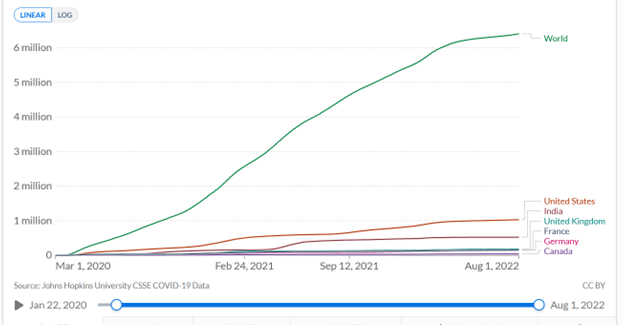
A recent publication in Lancet Infectious Diseases [1] estimates that Covid-19 vaccinations have prevented 18 million Covid-19 deaths. This is a steep claim given that 6.4 million deaths involving or caused by Covid-19 have been reported worldwide to date (https://ourworldindata.org/covid-deaths, accessed Aug. 2nd, 22; see Fig. 1)

Figure 1 – Cumulative number of Covid-19 deaths, https://ourworldindata.org/covid-deaths, accessed Aug. 2nd, 22  

Read more

Modelling and Model Building

…using the example of our study: “Identification of different factors associated with Covid-19 deaths in Europe during the first pandemic wave”

A large group of statistical techniques designed to explain past data and also to predict future data is statistical modelling. This means that for a given data set with very different variables, one finds a mathematical structure that represents this data set as well as possible, firstly in a purely formal way. This procedure can be used to examine the influence of different variables on an outcome variable. In the language of modelling, the variable that one wants to explain is the dependent variable or criterion or outcome variable, and the different variables that are supposed to contribute to the clarification of this one variable are several independent variables resp. predictors.

I use our recently published modelling study [1] as a concrete example. It was conceived by me, I calculated the first analyses, then my colleague Rainer J. Klement got involved, who as a physicist is much more nimble in dealing with such models than I am.

Read more

Face Masks Lead to Dangerously High Levels of Carbon Dioxide in Children’s Inhaled Air

The long version of our mask study has been republished

A workshop report and some thoughts on it

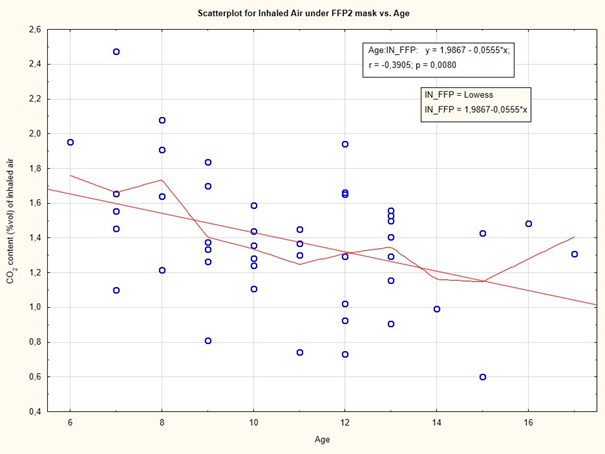
Our mask study measured carbon dioxide levels in the inhaled air of 45 children wearing face masks. It found that the inhaled air under children’s face masks contained unacceptably high levels of carbon dioxide, about 1.3% to 1.4% by volume, or 13,000 to 14,000 parts per million. Normal outdoor carbon dioxide levels are 400 ppm or 0.04% by volume. The Federal Environment Agency and various protective regulations have determined that 2,000 ppm or 0.2 vol.-% is the upper limit above which damage to health cannot be ruled out. For children, such high values, as we measured after only 3 minutes, are absolutely unacceptable. Especially against the background that children are neither at high risk of corona infections and Sars-CoV2 nor are they important spreaders of infections.

Read more

Risk-Benefit Ratio of Covid-19 Vaccination

Thoughts on Easter, the risk-benefit ratio of Covid-19 vaccination and key sources of information

No matter how you feel about Easter, whether you actively celebrate it as a Christian, with nostalgic memories of hunting for Easter eggs as a child, or whether you are a modern, science-oriented person who thinks Easter beliefs are superstitions: It is a holiday and should be celebrated. The arrival of spring was already celebrated in pre-Christian times. Christianity has given these ancient feasts a new face with the celebration of the resurrection of Jesus. What was ever truly alive – that is, standing in the fullness of God – does not die. At best, it is transformed. Or rather, it is resurrected into new life. That is Easter, and that is what is to be celebrated.

We have received a small Easter present, I think, in that the German Bundestag has rejected compulsory vaccination by a large majority. You can find out here how the parliamentary groups voted: the majority of SPD and Greens voted in favour of compulsory vaccination, most representatives of CDU, AfD, FDP and Die Linke voted against it. I suggest you write to your MPs, either thanking them, or admonishing and reminding them again. You can filter the results to see the MPs who represent your constituency and how they voted, and then write an email. Maybe our MWGFD action helped; because we sent our exit strategy to all MPs. You can download it there and send it again to the MPs who voted for compulsory vaccination, perhaps with a few more personal words.

Read more